The food
Camp oven, damper, billy tea
The bush cooking behind a Longreach dinner night: what a camp oven is, why gidgee coals, where damper comes from and how billy tea got its name.
Find a riverbank night ↗Quick answer
The dinner borrows its style from outback camp cooking: food cooked in a heavy lidded camp oven over gidgee coals, plain damper bread from the fire, and tea boiled in a billy. The courses themselves change, so this guide explains the customs rather than the menu.
Why the menu is not here
The two courses at the riverbank dinner are the operator’s to set, and they change, so a list of dishes would be out of date before you arrived. What does not change is the style: camp-oven cooking over gidgee coals, then damper and billy tea. Each of those has a story older than any restaurant in Longreach, and knowing it makes the meal more interesting than a menu card would. Diets are handled on request, with gluten-free, vegetarian and children’s meals available if you ask in advance.
The camp oven
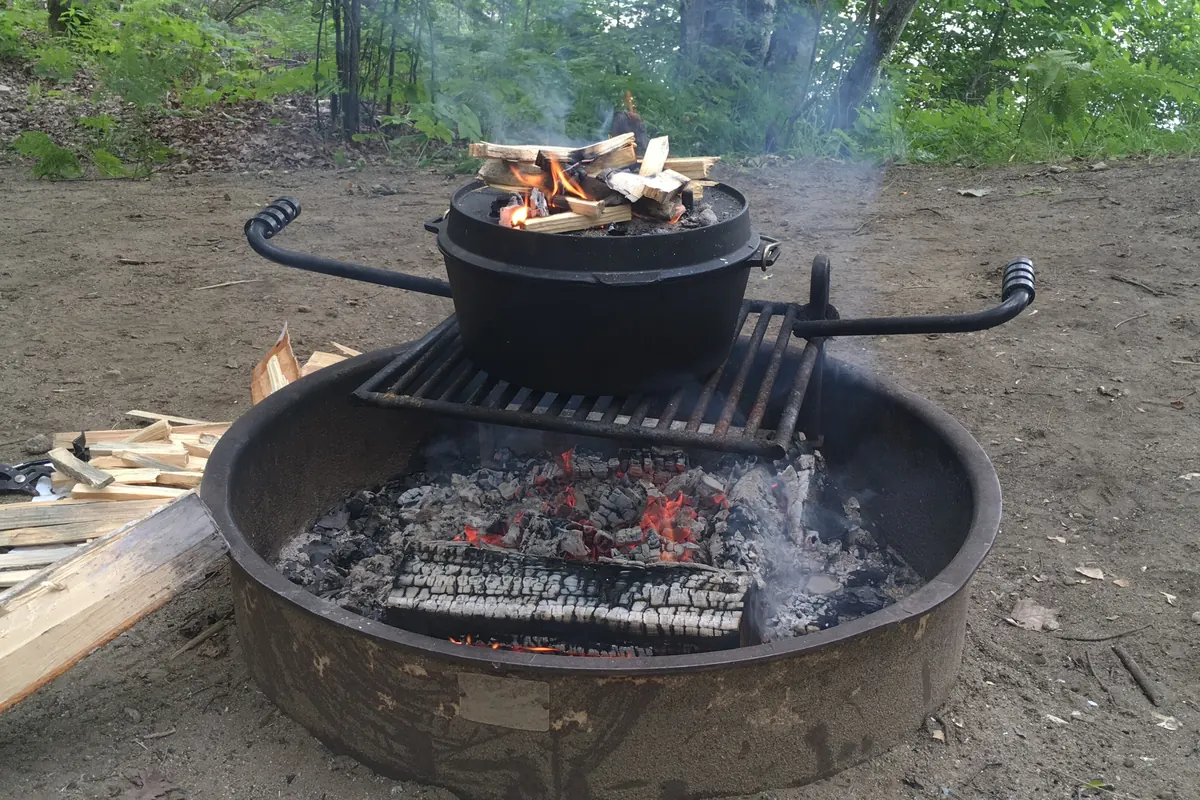
A camp oven is the Australian name for what much of the world calls a Dutch oven: a thick-walled pot with a tight-fitting lid. The camping kind has three legs, a wire bail handle and a slightly concave, rimmed lid, so that coals from the fire can sit on top as well as underneath; heat from both sides lets the inside act as an oven. Queensland has its own version. The Bedourie camp oven, named after the town of Bedourie, is a steel pot shaped and used like a Dutch oven, made as a sturdier alternative to cast iron that would not break.
Gidgee, the fire under it
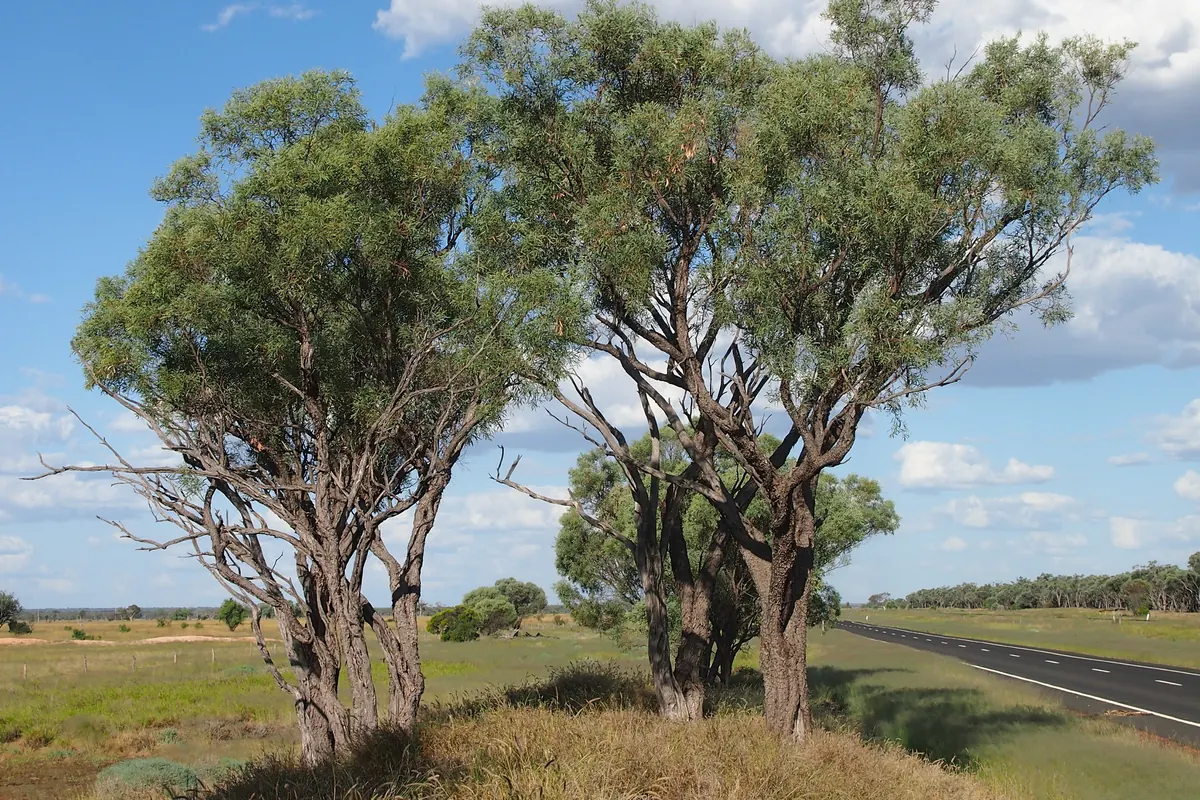
The dinner is cooked over gidgee coals. Gidgee, also written gidyea, gidya or gidgea, is Acacia cambagei, a wattle that grows four to fifteen metres tall in the arid and semi-arid country of eastern Australia, central Queensland included. It likes heavy clay soils and flat ground and often shares them with brigalow. Its least flattering name, stinking wattle, comes with a description of the living tree as foul-smelling.
Damper
Damper is a thick bread made from flour, salt and water, with a little butter if any is to hand, baked in the coals of a campfire either straight in the ashes or inside a greased camp oven. Stockmen who travelled remote country for long periods carried basic rations of flour, sugar and tea, which travel far better than loaves, and ate their damper with dried or cooked meat or with golden syrup. The name is a British word for something that takes the edge off the appetite. It is a different thing from bush bread, which Aboriginal people have baked for thousands of years from crushed native seeds, nuts and roots.
Billy tea
A billy, or billycan, is a light metal bucket used to boil water, make tea or cook over a campfire, and in Australia to boil the billy simply means to make tea. The phrase goes back at least to the gold rushes. The word most likely comes from the bouilli can, an emptied tin of preserved soup and boiled meat that was given a wire handle and reused as a kettle; the earliest known use of billy for a kettle is in an 1848 Tasmanian newspaper. The billy turns up in many of Henry Lawson’s stories and in Waltzing Matilda, whose swagman boils a billy at a bush camp.
How it comes together on the night
At the riverbank dinner the customs arrive in their natural order. The two courses, cooked camp-oven style, come first with table service. Damper follows at the end of the meal, freshly baked, with tea and coffee alongside; the paddlewheeler dinner serves its damper with golden syrup, as stockmen did. Drinks other than tea and coffee are sold at the bar. If anyone in your party cannot eat wheat, mention it when you book, since damper is a wheat bread through and through.
Sources